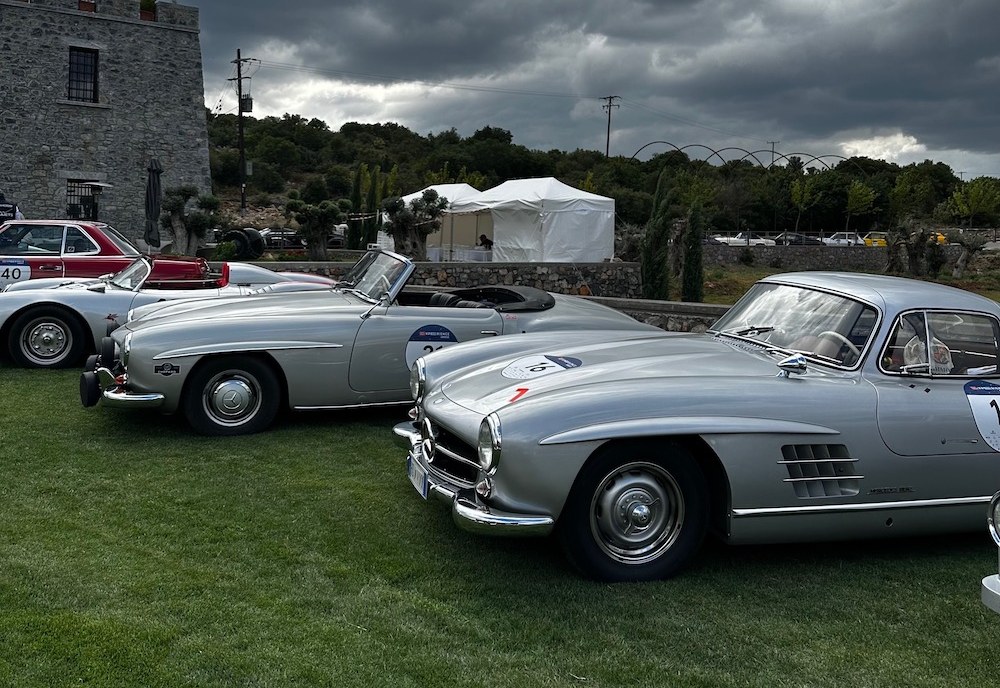
From 29th September to 3rd October, we followed the second edition of the 1000 Miglia Experience Greece. Sixty crews, starting and finishing in Athens, crossed the Peloponnese, passing through Ancient Olympia, Sparta, Kalamata, Mystras, and Porto Heli. In Greece, Zero Time's objective was clear: to ensure that those competing with our instruments, especially those in their first regularity race, knew how to use them well and always had a point of reference.
ZERO.3: one instrument, from the very first trials onwards
A good number of participants competed with Zero Time instruments. The more experienced crews already had their own instruments; for those without, we offered the rental or purchase of our ZERO.3.
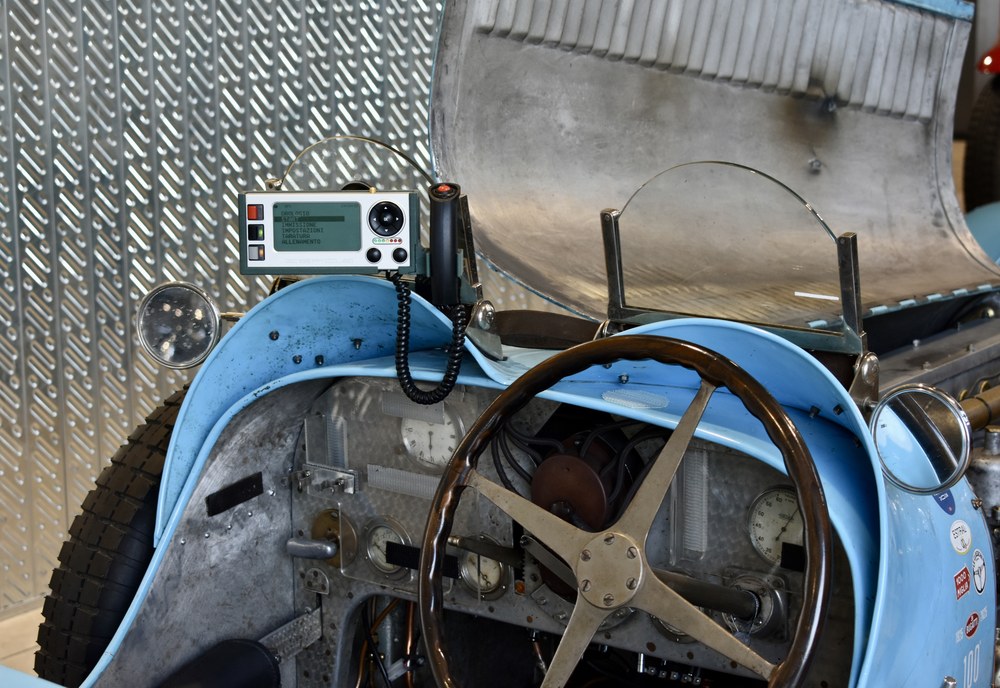
The reason is practical. A regularity race usually comprises two types of trials. In timed trials, a section delimited by pressure switches must be covered within a set time, and the deviation is measured to the hundredth of a second. In average speed trials, a predetermined average speed must be maintained, with checkpoints whose locations are unknown to the crew. The ZERO.3 combines a stopwatch, average speed meter, and tripmaster into a single instrument: with just one device on board, all trials on the route can be tackled, without having to combine multiple devices. For beginners, this meant learning to manage only one instrument.
From the briefing to the first questions during the race
The handover of each ZERO.3 was accompanied by a twenty-minute briefing, where we explained how to prepare the instrument before the start, then moved on to the information on the display and the operations to perform during the trials. We focused on the essential steps to get into the car with clear ideas, leaving the instruction manual as a reference for further details.
With some crews, we started even earlier, explaining how a regularity race works: understanding what a trial requires is the first step to understanding how the instrument can help tackle it.
Already after the first time control, the questions were different, more precise and clearer, because they arose from what the competitors had experienced in the race. The most frequent concerned the “restart from” function, to be used to resume from the correct trial; others wanted to understand which display data to keep an eye on during the different phases of the trial. Being able to revisit these aspects after they had been experienced helped us clarify doubts through examples directly encountered by the crews.
How we organised ourselves along the route
Each morning, we stayed at the start until the last car set off, so even those starting last could find us for a last-minute question. Then we took a more direct route to reach the time control for the lunch break, where we met the crews again with the day's first trials still fresh in their minds. The day concluded at the stage finish, where we remained available to prepare for the next day.
As the days passed, those meetings became more than just a support point. Many crews stopped by to say hello, even just to tell us about their morning, and between questions, there was space to talk about the journey, the roads, and the race.
This is one of the things we like most about these trips: getting to know the people who use our instruments, sharing a part of their experience, and seeing relationships develop that sometimes continue even after the finish.
At the finish: feedback and the podium
When collecting the rented instruments, we asked the crews for their opinion on the experience. The most recurring comment concerned the ease of use of ZERO.3, along with the enjoyment of five days spent between trials and landscapes. As one competitor told us when returning their instrument: «Oh yes, the device is cool, so easy to use.»
To conclude the trip, there was an added satisfaction: in the modern cars category, the Smussi–Smussi crew in an MG TF 115 won, having competed with our instruments for many years. After accompanying so many participants in their regularity debut, seeing long-standing customers on the top step of the podium was a great way to end the week.
Tips for tackling your first regularity race
The experience in Greece confirmed how useful it is to arrive at the start knowing the basics of regularity. Reading the regulations and informing yourself about timed trials, average speed trials, and time controls helps you understand what to expect and better follow the explanations on how to use the instrument.
When possible, it is advisable to book the instrumentation in advance and do some practice before the start: it is easier to clarify a doubt during a practice session than on the starting line.
Installation on board also matters. The display must be clearly legible for the co-driver, and the controls easy to reach. During a multi-day event, dedicating a few minutes each evening to recharging with the correct cable and setting up for the next stage allows for a more relaxed restart.
How Zero Time rental works
The rental of regularity instruments is designed for those who want to try the discipline without immediate purchase, or prefer to evaluate the instrument in a race before choosing it. When we participate in the event, our support during the race days is added to the delivery briefing. In case of subsequent purchase, the rental cost is deducted from the sale price.
The number of instruments we bring to the race is based on an estimate made from the entry list, so availability is limited. To ensure you get one and to arrange delivery, we recommend booking in advance via the form on our website.
Do you have a race planned? Contact us to choose the most suitable instrument and learn about rental or purchase options.