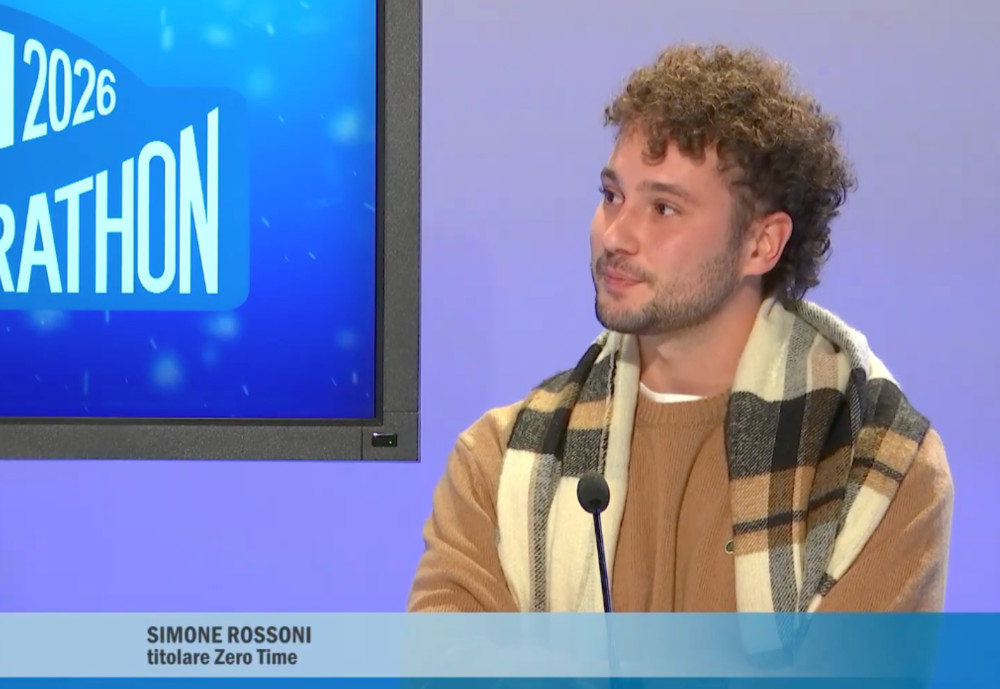
On Saturday 7 November, on the roads of the Val Trebbia, Nicola Barcella and Simone Rossoni won the 23rd Circuito delle Valli Piacentine. Out of 63 classified crews, they finished ahead of everyone, 14.67 points clear of the runners-up.
It is their second win at Bobbio, after 2022. And it is one more victory in a season that has seen them on the top step more than once, behind the wheel of very different cars.
The event: 120 km and 65 timed tests on the roads of the Bobbio–Penice
The Circuito delle Valli Piacentine is organised by Bobbio Autosport and is part of the ACI Sport classic regularity calendar. Bobbio is well known to anyone who competes: a medieval village in the Val Trebbia, surrounded by hill roads that seem made for regularity rallying.
The 2026 edition featured a new route of around 120 km through Bobbio, Cerignale, Corte Brugnatella and Ferriere. There were 65 timed tests, all different and none repeated, including the two counting towards the Trofeo ACI Piacenza. Every test was held on open road, none in car parks: bends, climbs and descents to be tackled at exactly the right pace, without losing concentration.
The first test started on the Bobbio–Penice provincial road, heading towards Monte Penice. This is no ordinary road. From 1929 it hosted the Bobbio–Penice hill climb, and in 1931 Enzo Ferrari won it driving an Alfa Romeo 8C 2300. According to the organisers, it was his last victory as a driver.
The entry list included historic cars built up to 2000, alongside a separate classification for modern cars. By the end of the day, 63 historic crews were classified.
Barcella and Rossoni: first of 63, and more
Nicola Barcella and Simone Rossoni competed as car number 19, in an Autobianchi A112 Abarth, for F.M. Franciacorta Motori. In regularity, every test is measured in hundredths of a second: each hundredth away from the set time becomes a penalty. Over 65 tests in a single day, the difference is made by the crew that stays precise from the first test to the last.
Barcella and Rossoni finished with 270.29 penalty points, the lowest score of the day. Behind them were Lorenzo and Mario Turelli in a Lancia Aprilia, 14.67 points back. Third place went to Guido Barcella and Ombretta Ghidotti in a Fiat 508 C, winners here in 2023, giving Franciacorta Motori two crews on the podium.
The win is just as clear in the MVP classification, which rewards the crew with the fewest net penalties, without the coefficients based on the age of the car. There too, Barcella and Rossoni came first, with 151 points and a 25-point margin over Roberto and Andrea Paradisi. In other words, they won on pure precision, test after test.
A season at the front
Bobbio is not a one-off. In 2026, Barcella and Rossoni have stood on the top step several times, each time in a different car.
In April they won the Franciacorta Historic, in a record-breaking edition for entries. At the end of June, at the Cisalpina Classic Race in the Aosta Valley, they won the Gran Turismo class in a Ferrari Roma, also taking the average-speed test classification.
In September, one week apart, came two major results in a 1938 Fiat 508 C. At the 25th Città di Lumezzane, a round of the Italian Historic Regularity Championship, they won out of 66 crews, ahead of the Turellis once again. A few days later, at the 36th Gran Premio Nuvolari, they finished fourth out of 280 crews from around the world, in a top five made up entirely of pre-war cars.
Three cars, three ways of competing
What stands out most about this season is the variety of the cars. More than eighty years separate the oldest from the newest, and power ranges from 32 to 620 horsepower.
The Fiat 508 C was built between 1937 and 1939: it has a 1,089 cc four-cylinder engine producing 32 hp, and a top speed of 110 km/h. The Autobianchi A112 Abarth dates from the 1970s: a small four-cylinder engine producing between 58 and 70 hp depending on the series, and a top speed of up to 160 km/h. The Ferrari Roma is a car of our time: a twin-turbo V8, 620 hp and 320 km/h.
In regularity, the fastest car does not win. The car that keeps closest to the set times does. Each car, however, brings its own challenges.
The Fiat 508 C has little power and a four-speed gearbox. On climbs, every gear change has to be anticipated to hold the average speed, and on descents the brakes demand a safe margin into every corner. Everything has to be planned ahead.
The A112 Abarth is light, small and responsive: its strength is agility through tight bends, like those of the Val Trebbia. The risk is the opposite one: in such a lively car, it is easy to arrive early.
The Ferrari Roma has power to spare, and the job becomes holding it back. With 620 hp, a touch too much on the throttle is enough to burn precious hundredths: it takes a very light foot and a great deal of discipline.
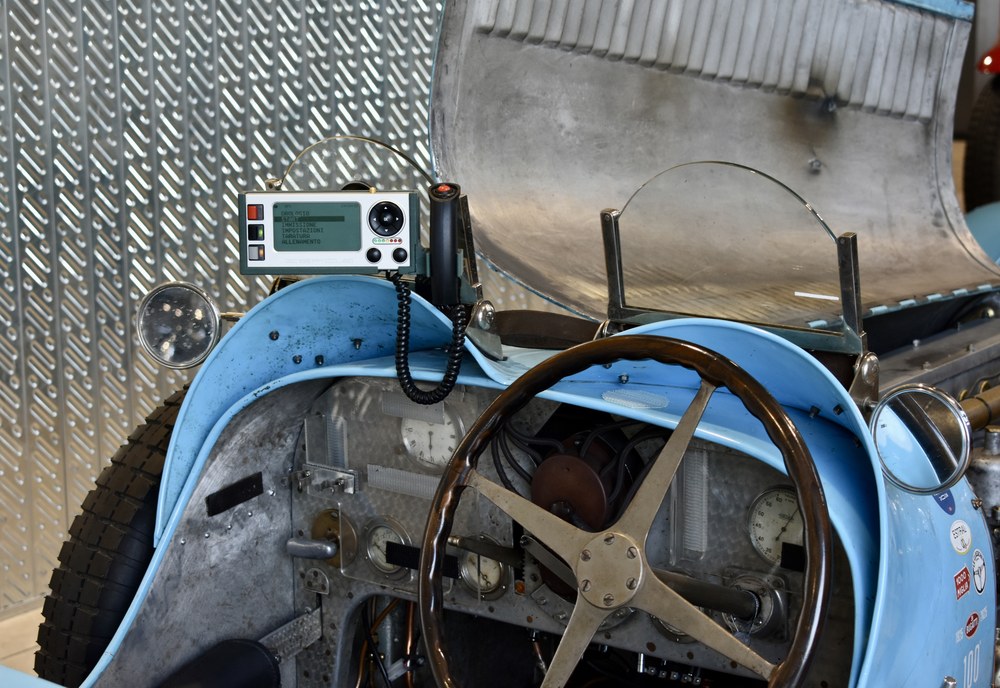
Winning in such different cars says one thing: the result does not depend on the car, but on the crew’s method and understanding. And on reliable instruments that measure in exactly the same way in a 1938 car as in a 2021 one.
Next stop: the Coppa della Presolana
Congratulations to Nicola and Simone, and thank you to Bobbio Autosport for a day of competition on roads that have made motorsport history.
Our next stop is the 16th Rievocazione Storica della Coppa della Presolana, on Saturday 28 and Sunday 29 November. It is organised by the Club Orobico Auto Moto d’Epoca: the event starts in Seriate and climbs through the valleys around Bergamo to Castione della Presolana. On Sunday the route heads towards the Passo della Presolana and the Valle di Scalve, with 75 tests over the two days.
If you are taking part, come and say hello. If you would like to compete with a Zero Time instrument, you can rent one or request support by getting in touch: availability is limited, so it is worth contacting us early. All our upcoming events are in our calendar.
See you at the next event!